
We share different itineraries and tips so you know how long to spend at the Prado Museum and how to make the most of every minute, depending on your interests and the time you have available.
The Prado Museum houses an immense collection, with over 8,000 paintings, in addition to thousands of sculptures, prints, and decorative arts. This is a number that makes the question is it possible to see the entire Prado? have a clear answer: no, it is not viable to see absolutely everything in a single visit.
To give you an idea of the magnitude, the Prado Museum is usually open about 10 hours a day, from 10:00 to 20:00. If you wanted to stop for just one minute at each of those 8,000 works, you would need more than 133 hours, which translates to more than 13 full days. If we reduced it to the 10 hours the museum is open and you didn’t eat, go to the bathroom, or rest for a single minute, you would have about 4.5 seconds per work.
Therefore, the secret to truly enjoying the Prado is not trying to see everything in a single visit, but in planning a smart itinerary focused on your interests. Depending on whether you have two hours, half a day, or a full day, the experience will be totally different. Do you want to see the masterpieces that appear in all the books? Or do you prefer to immerse yourself in a specific pictorial school? Here are some ideas:
If you have little time (an hour, for example), it will be best to go straight to the best-known works. The museum itself recommends this itinerary, ideal if you only want to see the most iconic paintings such as:
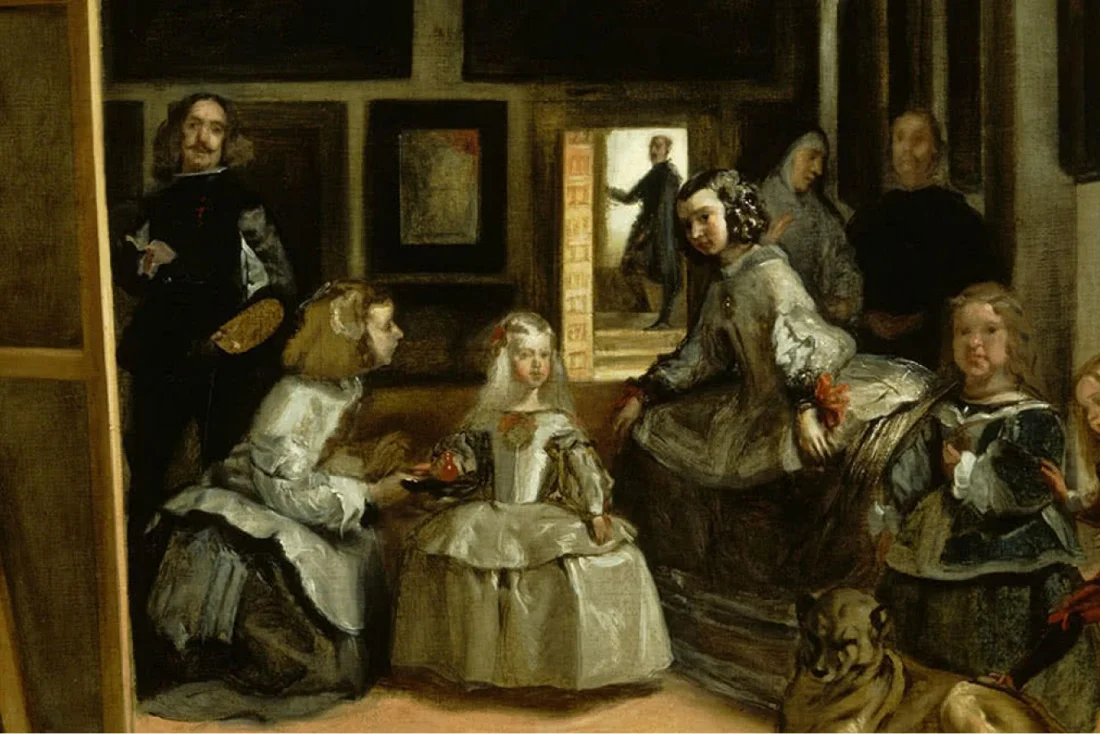

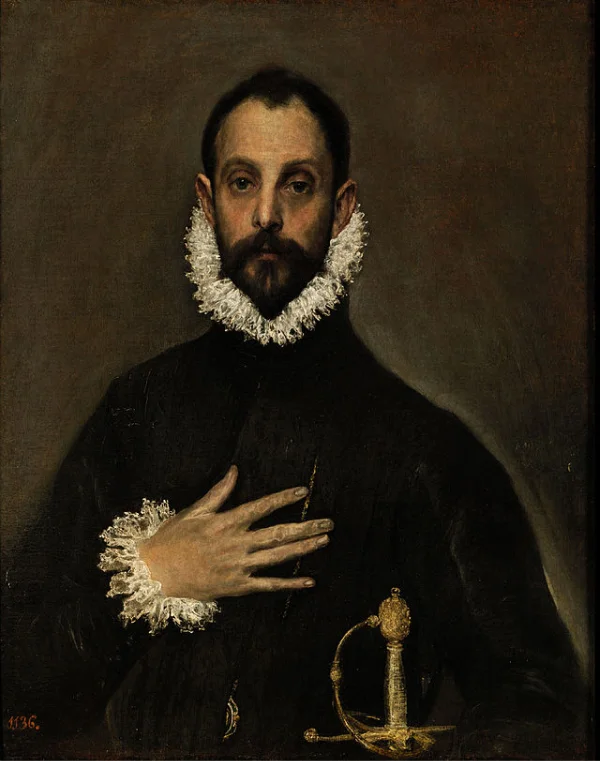

From our point of view, this is the most enriching way to visit the Prado. Instead of rushing from one famous painting to the next, focusing on one school provides context and makes your visit a more meaningful cultural experience. Moreover, it allows you to understand the influences, evolutions, and ways in which artists expressed themselves through their works.
This itinerary, focusing on the main schools, can help you see the Prado Museum in around 2 hours:
This is, by far, the most extensive and relevant collection in the museum. It couldn’t be any other way, as the Prado originated from the Spanish royal collections. It is here that the so-called Spanish Golden Age shines brightest.
When you explore this section, you will see the evolution of Spanish painting from the religious and solemn art of Ribera and Zurbarán to the masterful realism and light of Velázquez. Don’t just stick to Las Meninas; dedicate time to his portraits, such as The Court Dwarf Don Diego de Acedo, or his mythological subjects.
Then comes the work of Goya, which occupies almost an entire floor. Goya is a universe in himself: from the cheerful tapestry cartoons, passing through the court portraits, all the way to the chilling Black Paintings, which are the last things he painted in his house. Seeing works like Saturn Devouring His Son in person is a powerful experience that requires its own time to process. If you focus only on this school, the route will take you through the artistic evolution of Spain.

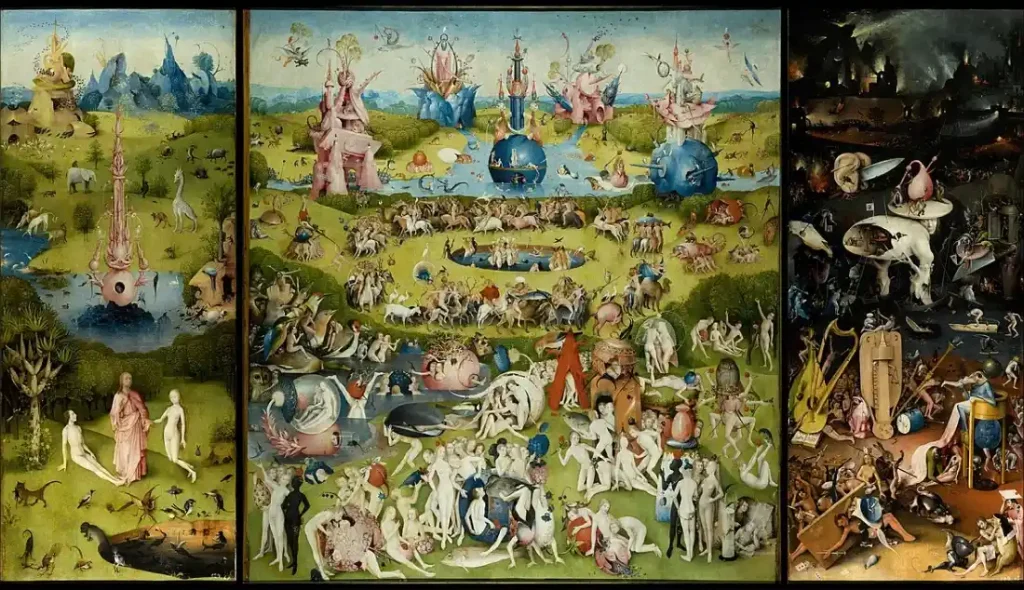
Because Flanders was part of the Spanish Crown for centuries, the Prado Museum owns one of the best collections of Flemish art in the world, a true treasure. If you are passionate about Northern painting, this is your route.
The great protagonist here is Bosco, with his enigmatic and marvelous The Garden of Earthly Delights. You can spend half an hour just looking at this triptych and keep discovering details. It is a visual puzzle that mixes the religious with the grotesque.
In addition to Bosco, you have a spectacular representation of Rubens, the baroque artist par excellence in Flanders. His works are pure energy and color, such as The Three Graces or The Judgment of Paris. You will also find other greats like Van Dyck or Brueghel the Elder. Touring this school allows you to see the contrast with Spanish and Italian painting: an art more focused on details, daily life, and a different symbolism. The richness and volume of works from the Flemish school in the Prado are, simply put, impressive.
Although it is the second most extensive, the Italian School is fundamental to understanding the Prado, as it was the main influence on Spanish artists. It is here that Spanish royalty collected the great masters of the Renaissance and the Baroque.
When you are in these rooms, look for the works of Titian. He was the favorite painter of Charles V and Philip II, and his influence on Velázquez was enormous. You will see his portraits of power and his mythological subjects with a truly surprising sensuality and mastery of color.
You will also find Raphael, the master of harmony and Renaissance beauty. Although the number of works is smaller than in other schools, their quality is sublime, such as his panel The Holy Family of the Lamb. And, of course, don’t forget other essential artists like Tintoretto or Caravaggio, with his dramatic chiaroscuro, although the latter only has one work, David and Goliath. The Italian route provides you with a solid foundation for understanding how European art reached the peninsula.

If you are a true art lover and have a whole free day, you can try a “marathon visit,” although we assure you that you will end up exhausted. If you ask yourself, “how long does it take to see the majority of the Prado Museum?“, the answer is that, in one day, with strategic planning and focusing only on the highlights of each room, you can see a very significant portion of the permanent collection.
Here is an approximate itinerary for a full day:
If you want to avoid crowds and enjoy the works with relative calm, the best time to visit the Prado is usually first thing in the morning, right when it opens (at 10:00), or mid-morning on a weekday. Weekends and holidays are, logically, the busiest days.
And here comes the information that is always interesting: the National Prado Museum has a free admission time, and yes, it is at the very end of the day. The free schedule is Monday to Saturday from 18:00 to 20:00, and on Sundays and holidays from 17:00 to 19:00.
However, you should keep in mind that the queue for free admission forms quite early and is quite long. Therefore, our advice is that, if you have little time and want to see a key part without stress, it is better to pay the entrance fee and go in first thing in the morning.
If your budget is very tight (and you don’t mind the volume of people), or if you want to use that time for a second look, use the free schedule, but be aware that the main halls will be packed. Also, keep in mind that Thursday afternoons tend to be a little less crowded than other weekdays, just in case that detail helps you!
In addition to thinking about how long to spend at the Prado Museum, don’t miss the opportunity to take the Art Walk, also known as the Art Triangle, which includes three major museums in the city that are so close you can walk from one to the next.
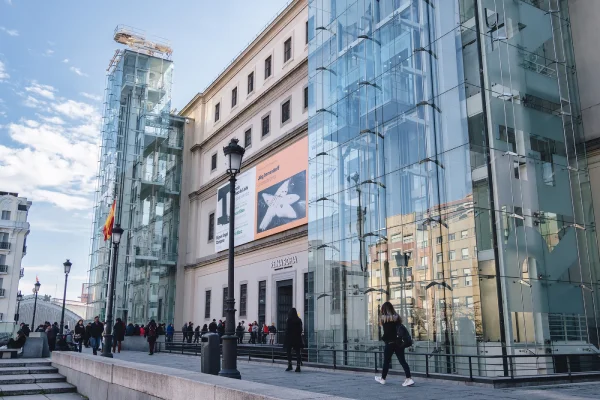
The most important, after the Prado, is the Museo Nacional Centro de Arte Reina Sofía. This is where the collection of Spanish art from the 20th century onwards is exhibited. The star work is, without a doubt, Pablo Picasso’s Guernica. Visitors usually spend a little less time here than at the Prado, perhaps between 2 and 4 hours. As a recommendation, don’t miss the work of Salvador Dalí and Joan Miró. Also, the building itself is a gem that you shouldn’t miss on your trip to Madrid.
And closing the triangle is the Museo Nacional Thyssen-Bornemisza. This museum is the piece that fits perfectly between the previous two. Its private collection, now public, spans Western art from the 13th to the 20th century. What is fascinating about the Thyssen is that it allows you to see works by masters who are not as well-represented in the Prado, such as Impressionism, Post-Impressionism, or Pop Art. There are works by Van Gogh, Monet, Degas, Hopper… It is a more educational collection and, often, less crowded. If you like seeing the evolution of different artistic currents, the Thyssen is a mandatory stop.

Ultimately, our recommendation is that, if you want to see all three museums, you dedicate a full day to the Prado, and on the following day, start with the Thyssen and finish with the Reina Sofía.
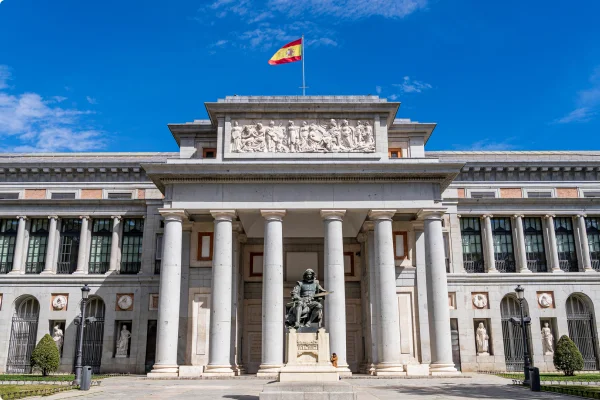
PRADO TICKETS
Embark on an enriching journey through the Prado Museum with our convenient entry ticket, offering exclusive access to one…
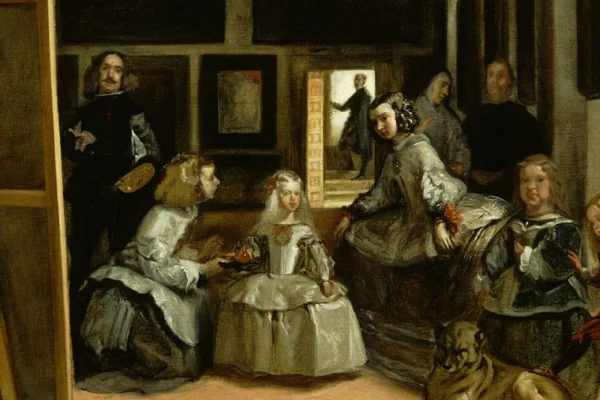
MADRID INFORMATION
Learn about the Prado Museum’s location in Madrid. Find directions and tips to easily navigate to this cultural landmark…
MADRID INFORMATION
Discover Prado’s hours, plan your visit effortlessly. Uncover the iconic museum’s opening times for an enriching experience…


