History of the Prado Museum
Here we explain the history of the Prado Museum in Madrid, which houses a collection of works by Velázquez, Goya, and other artists. Additionally, it outlines the origins, cultural significance, and primary milestones.
Support when you need it
Customer support to help you with everything you need from 8:00 to 18:00.
Fast and online booking
Select your ticket for your needs and preferences and avoid the lines booking here.
Top attraction in Madrid
Enjoy masterpieces by Velázquez, Goya and other renowned artists at the Prado Museum.
The beginnings of the Prado Museum
The Prado Museum originated from the Spanish Crown's ambition to showcase its cultural prestige across Europe. Authorized by King Ferdinand VII, the project was primarily championed by Queen Maria Isabel of Braganza. She persuaded the monarch to transition the vast royal collections from private palace displays to a public setting.
Initially established as the Royal Museum of Paintings, the institution aimed to safeguard national heritage while educating the public's artistic taste. This transformation marked a significant milestone in Spanish history, converting exclusive aristocratic treasures into a national legacy. Today, the Museo Nacional del Prado stands as a testament to this vision, housing a collection of immense historical relevance and artistic magnitude. As one Quora user puts it: “The quality, quantity, historical relevance, and magnitude of the works is truly impressive.”
When was the Prado Museum built?
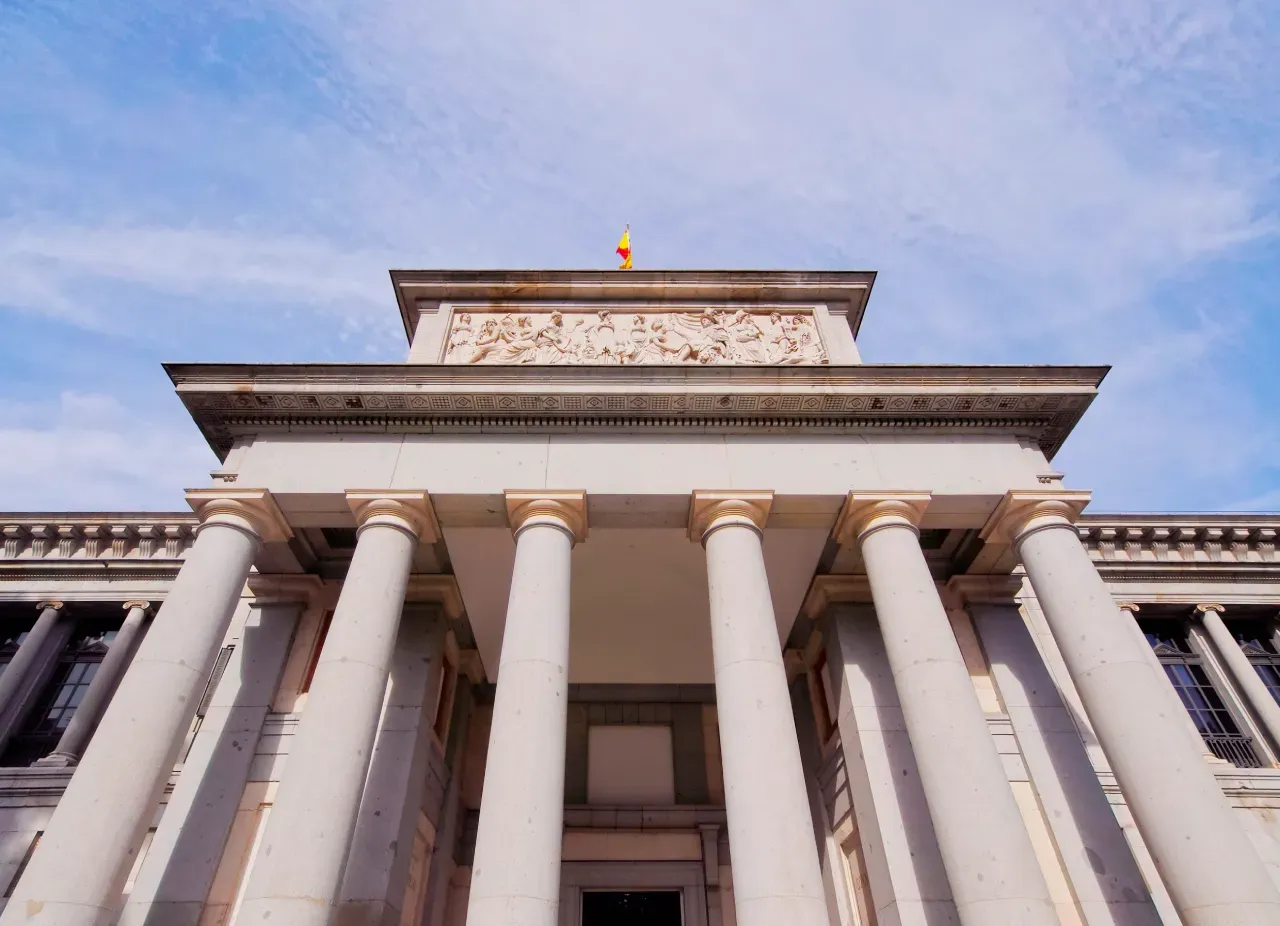
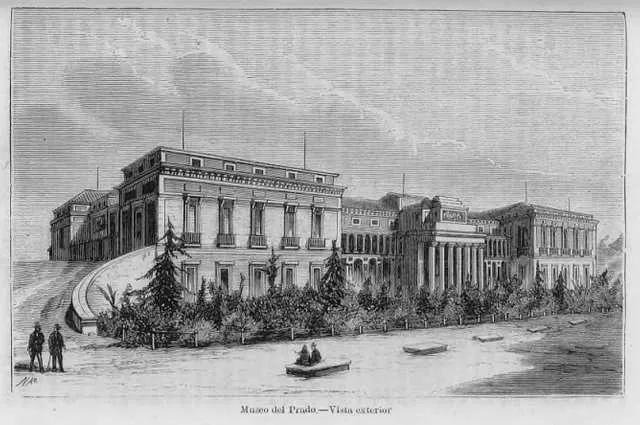
Although the museum opened under Ferdinand VII, the physical structure dates back to 1785. Architect Juan de Villanueva originally designed the building during the reign of King Charles III, who intended it to house the Royal Cabinet of Natural History. The neoclassical project faced interruptions during the Napoleonic Wars, but the site was eventually repurposed to fulfill the Queen’s vision for a public gallery.
The facility finally inaugurated its doors in 1819, marking the transition from a scientific project to a premier art space. To accommodate the continuous growth of its holdings, the building underwent several strategic expansions throughout the 19th and 20th centuries, ensuring the preservation of the masterpieces.
Timeline of the Prado Museum
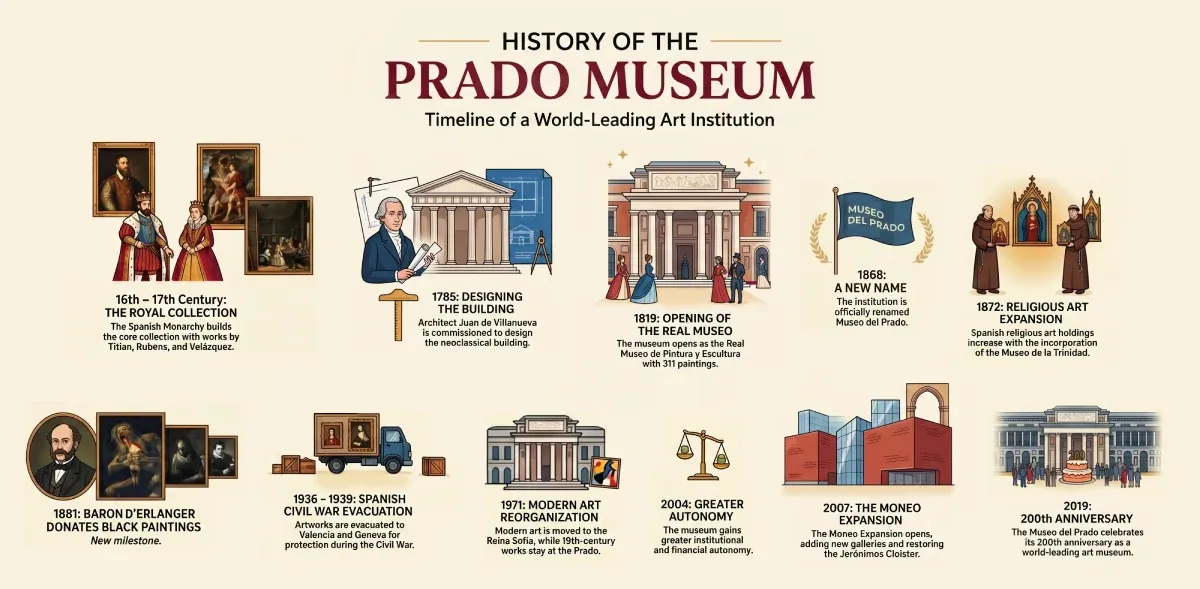
The history of the Museo Nacional del Prado reflects the ambition of the Spanish Monarchy and the evolution of art in the country. From its origins in the royal collections of the 16th and 17th centuries to its transformation into one of the best-known museums in Europe, the development of the Prado reflects the artistic, political, and social history of Spain. The following timeline highlights the key moments that shaped the museum from its foundation to the present day:
- 16th – 17th Century: The core of the Prado’s collection is formed by the Spanish Monarchy, especially under Charles V, Philip II, Philip III, and Philip IV, who patronized artists such as Titian, Rubens, and Velázquez.
- 1785: King Charles III commissions architect Juan de Villanueva to design a neoclassical building intended for the Royal Cabinet of Natural History.
- 1819: The building opens as the Real Museo de Pintura y Escultura, promoted by Queen María Isabel de Braganza. The first catalogue lists 311 paintings.
- 1868: Following the Glorious Revolution, the institution officially adopts the name Museo del Prado.
- 1872: The collection of the Museo de la Trinidad is incorporated, significantly enriching the Prado’s holdings of Spanish religious painting.
- 1881: Baron Émile d’Erlanger donates Goya’s Black Paintings after their transfer from the walls of the Quinta del Sordo to canvas.
- 1936 – 1939: During the Spanish Civil War, the museum closes and major artworks are evacuated to Valencia and later Geneva for protection.
- 1971: The Museo de Arte Moderno is dissolved. Nineteenth-century works remain at the Prado, while modern and contemporary art forms the basis of the Museo Reina Sofía.
- 2004: A new legal framework grants the Prado greater institutional autonomy, improving governance, financial management, and conservation policies.
- 2007: The Moneo Expansion opens, adding new gallery spaces, restoration workshops, and the restored Jerónimos Cloister.
- 2019: The Museo del Prado celebrates its bicentenary with major exhibitions and international recognition as one of the world’s leading art museums.
Major Milestones
Some of the major milestones of the museum are the expansion of its collection, the contributions of precious historical treasures, and its modernization:
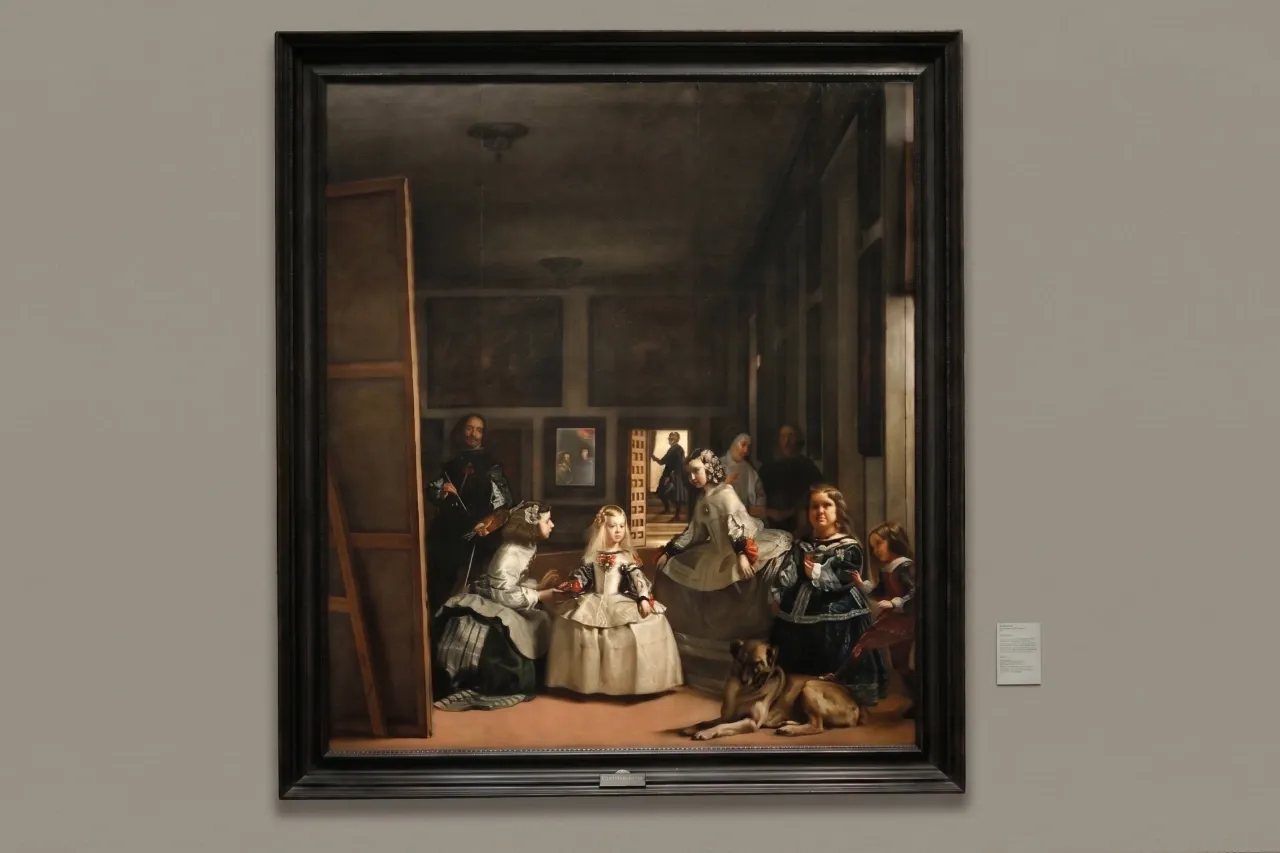
- The collection expanded during 19th and 20th century through donations and purchases. The collection houses world-renowned masterpieces such as Velázquez’s “Las Meninas”, Goya’s “The Third of May 1808”, and Bosch’s “The Garden of Earthly Delights.”
- The Villanueva Building was designed by Juan de Villanueva and is a classical neoclassical architectural masterpiece. But the recent expansion by Rafael Moneo added a new building connected to the old building. This enhanced the facilities and the capacity of the museum.
More information about the Prado Museum
Prado Museum Tickets
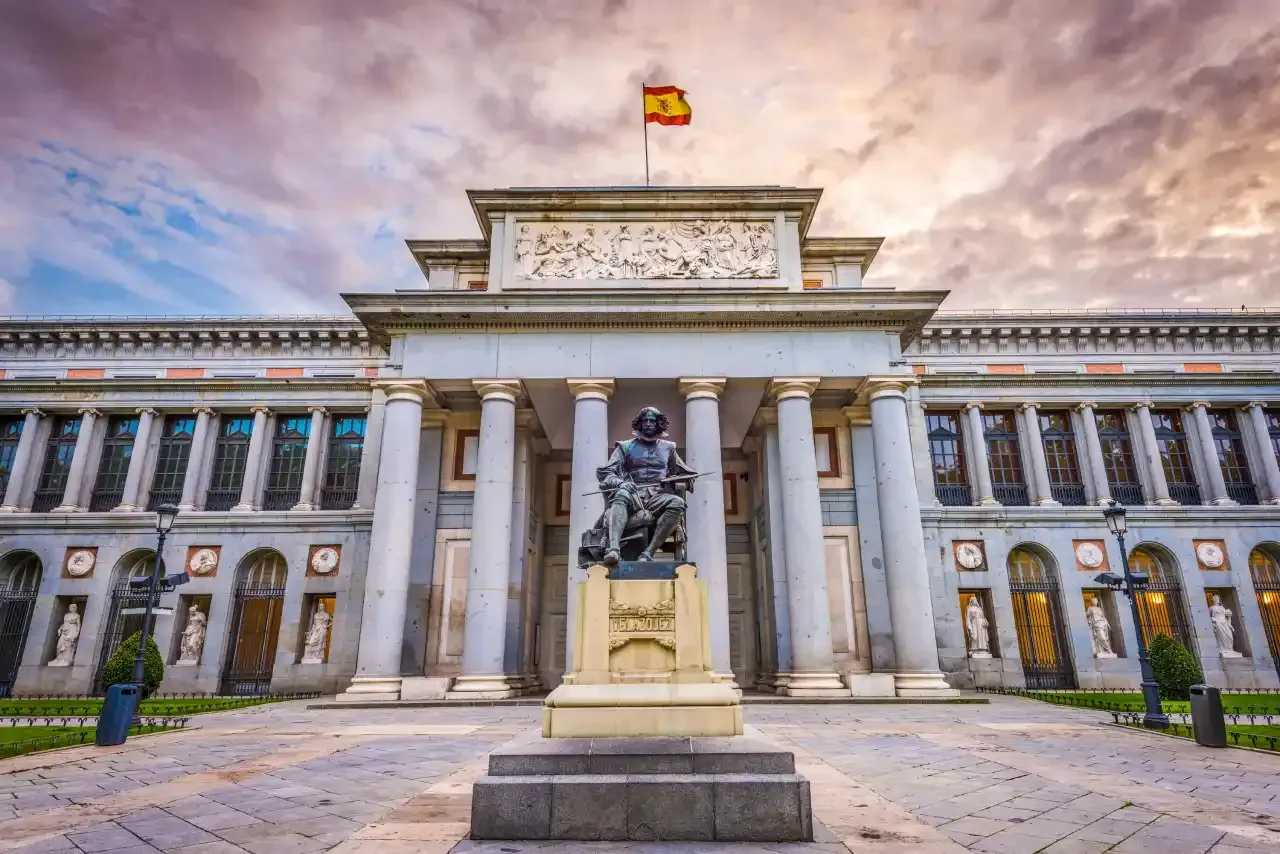
Located in the heart of Madrid, the Prado Museum is one of the city’s most iconic attractions and a must for anyone visiting the capital. Home to the world’s finest collection of Spanish painting, along with masterpieces from other European schools, it offers an unforgettable journey through centuries of art.
With over 15,000 m² of exhibition space and works by more than 5,000 artists in its archives, the museum invites you to explore its vast galleries at your own pace. Entry requires a ticket, and opening hours vary depending on the day so planning ahead is key.
Secure your ticket now and make sure you don’t miss this essential Madrid experience!